
This website uses cookies

We use cookies to personalize content and ads, to provide social media features and to analyze our traffic. We also share information about your use of our site with our social media, advertising and analytics partners who may combine it with other information that you've provided to them or that they've collected from your use of their services. See our Website Privacy Notice. Closure of this notice constitutes acknowledgement.

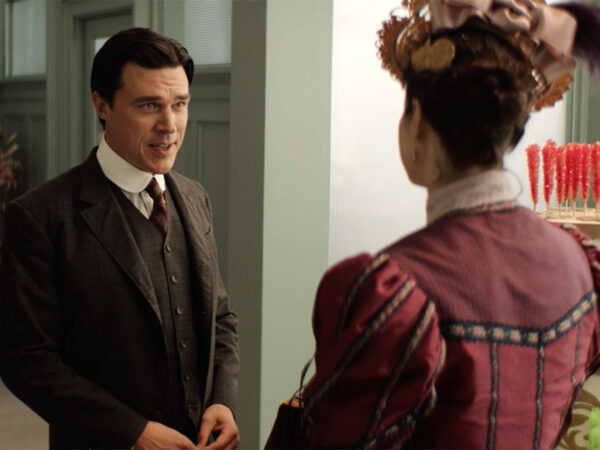
Milton meetings Catherine in the candy store.

About the HERSHEY Movie

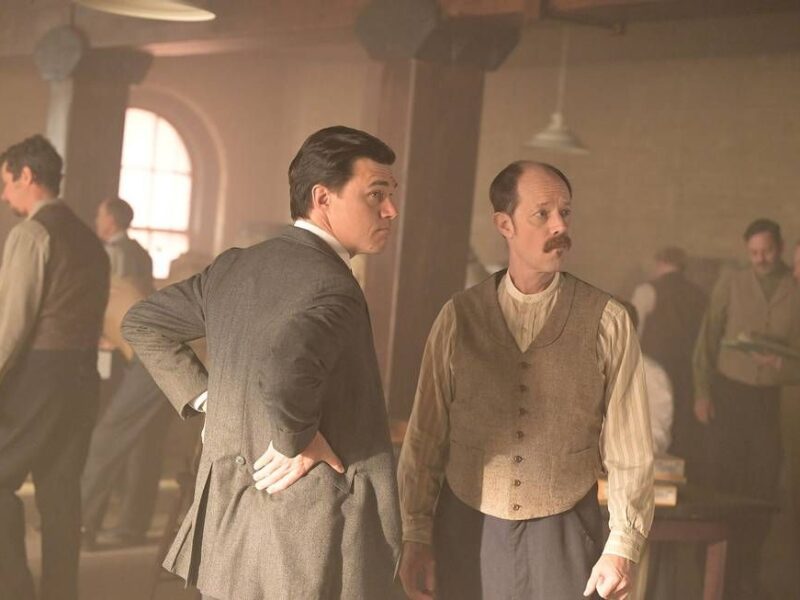
HERSHEY is a biographical drama directed by Mark Waters. The movie stars Finn Wittrock as Milton S. Hershey and Alexandra Daddario as Catherine “Kitty” Hershey.

Filming took place in 17 locations across Pennsylvania, including Hershey and Pittsburgh. The production designed and built 74 sets to recreate Milton Hershey’s world of the late 1800s and early 1900s.

The filmmakers worked with historical materials and consulted with historians at Milton Hershey School, Hershey Community Archives, and The Hershey Story Museum before and during production.
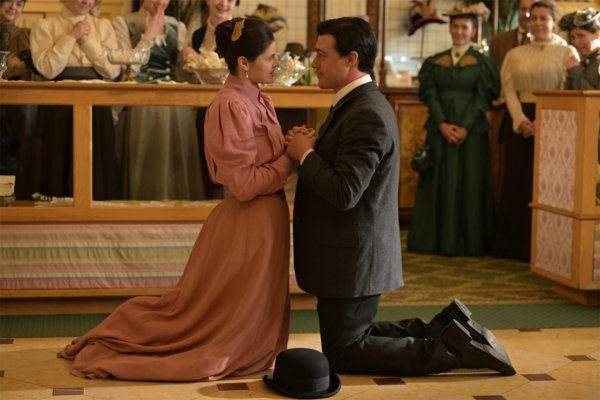
Main actors of HERSHEY movie

Be Among the First to See HERSHEY

Be among the first to reserve your seats and discover the true story of Milton and Catherine Hershey.

The HERSHEY Movie by the Numbers

17

filming locations across Pennsylvania

74

sets built to recreate the Hersheys’ world

1500+

background actors in factory and town scenes

2300+

total costumes, including 300 principal designs

54

custom-designed costumes for Catherine Hershey

250th

anniversary of the United States release

Synopsis

HERSHEY tells the story of how one couple’s vision started a chocolate empire. Starring Alexandra Daddario and Finn Wittrock.
Hershey Movie Exhibit Logo-Angel-Brand-Colors-02-FINAL

The Making of the HERSHEY Movie

Opening in November 2026, a new special exhibit at The Hershey Story Museum takes visitors behind the scenes of the making of the HERSHEY Movie.

The film tells the inspiring love story of Milton and Catherine Hershey and their shared commitment to children and the school they founded. Through original costumes, authentic movie props, and interactive experiences, the exhibit explores the many creative elements of motion picture production.

Visitors can step into Joseph Royer’s candy shop to “run lines” from the film, try their hand as a Foley artist by creating sound effects, and watch exclusive interviews with the cast and crew.

From story to screen, the exhibit offers a unique look at the artistry, craftsmanship and collaboration that bring a movie to life.

Frequently Asked Questions

About the HERSHEY Movie

Historical Accuracy

HERSHEY is a Major Motion Picture informed by real people, events, and places. These FAQs explain the historical research, primary sources, expert consultation, and creative decisions that shaped HERSHEY, providing transparency about how more than 50 years of documented history were adapted into a feature-length film

What is the HERSHEY Movie about?

The HERSHEY movie tells the story of Milton Hershey and Catherine “Kitty” Sweeney Hershey. It follows Milton Hershey’s work as a confectioner and the growth of his chocolate business. The film also shows the Hersheys’ decision to create a home and school for children seeking greater opportunity and the events that led them to place their fortune in its care.

Who is starring in the HERSHEY Movie?

The film stars Finn Wittrock as Milton Hershey and Alexandra Daddario as Catherine “Kitty” Hershey. The cast also includes Alan Ruck, Richard Kind, David Costabile, and Heléne Yorke.

Is the HERSHEY movie historically accurate?

Yes. The HERSHEY movie is based on historically documented events from the lives of Milton S. Hershey and Catherine “Kitty” Hershey and accurately portrays the major milestones that shaped their lives, businesses, and philanthropic legacy. The movie was reviewed for both Hershey-specific history and broader historical accuracy, from major plot points to period-authentic details.

What parts of Milton Hershey’s story are covered in the movie?

The movie follows many of the most important chapters of Milton Hershey’s life, including:

  • His childhood in rural Pennsylvania and the challenges faced by his family
  • The influence of his mother, aunt, and uncle
  • His early career as a printer’s apprentice and confectioner
  • His business failures before achieving success
  • The founding and growth of the Lancaster Caramel Company
  • His visit to the 1893 World’s Columbian Exposition in Chicago and his decision to pursue chocolate manufacturing
  • The development of milk chocolate production in the United States
  • His marriage to Catherine “Kitty” Hershey
  • The founding of the school that would become Milton Hershey School
  • His commitment to community building and philanthropy
  • The decision to devote his fortune to the school’s future

Collectively, these events tell the story of how Milton Hershey overcame repeated setbacks, built one of America’s most successful confectionery businesses, and ultimately devoted his fortune to creating opportunity for others.

What parts of Milton and Catherine Hershey’s story are based on documented historical events?

Historical records confirm Milton and Catherine’s courtship, marriage, shared philanthropic vision, creation of Milton Hershey School, and Catherine’s role in shaping decisions that continue to influence Hershey institutions today. Both Milton and Catherine signed the original Deed of Trust establishing the Hershey Industrial School, now known as Milton Hershey School, and Milton frequently credited Catherine with inspiring the idea.

Did Hershey consult historians or local experts when making the movie?

Yes. Historians, archivists, curators, and subject matter experts from The Hershey Story Museum and Hershey Community Archives were deeply involved throughout the filmmaking process. The production team consulted with experts that preserve and interpret Hershey history, including:

  • Amy Zeigler, Senior Director, The Hershey Story Museum and Hershey Community Archives
  • Valerie Seiber, Senior Manager, Historical Collections & Exhibitions, The Hershey Story Museum
  • Jennifer Henderson, Senior Archivist, Hershey Community Archives
  • Tesa Burns, Archivist, Hershey Community Archives
  • Alicia Parks Schlossberg, Manager of School History, Milton Hershey School

Experts reviewed the script, shared historical records, provided access to collections, conducted tours of important locations, and advised on historical details ranging from major plot points to period-appropriate objects and settings. Historians were also on set during filming to help ensure the movie’s authenticity. This collaboration helped ground the movie in historical evidence while preserving the storytelling elements expected from a feature film.

What historical sources informed the movie?

The movie was informed by a wide range of historical records and materials, including:

Primary sources

  • The 1909 Deed of Trust signed by Milton and Catherine Hershey
  • Archival photographs and correspondence
  • Speeches and recorded statements
  • Contemporary newspaper accounts
  • Business and institutional records

Institutional collections

The filmmakers also examined physical artifacts, reviewed historical locations, and used period research to inform costumes, props, and set design.

What does the movie get right about Milton Hershey?

The movie accurately captures the core themes that defined Milton Hershey’s life:

  • His perseverance in the face of repeated business failures
  • His pursuit of affordable milk chocolate for a broad consumer audience
  • His commitment to people and community development
  • His belief that business success should benefit others
  • His partnership with Catherine Hershey
  • His decision to devote his fortune to helping children through education

Perhaps most importantly, the movie reflects how Milton Hershey believed in hard work, perseverance, and personal responsibility. For Hershey, success carried responsibility. It was meant to create opportunity for future generations—a philosophy that continues to shape the organizations he founded today.

What creative liberties did the filmmakers take?

HERSHEY filmmakers used several common historical drama techniques. To tell a story spanning more than 50 years, some timelines were condensed, certain characters were combined or created to represent broader historical realities, and a limited number of private conversations were dramatized where no historical record exists. These choices were made to help audiences understand broader historical truths rather than alter the major facts of the story, which remain consistent with the historical record.

Does the movie sanitize or whitewash history?

The movie does not change the major documented events in Milton and Catherine Hershey’s story but is selective in what it covers. It portrays the school’s early student population consistent with the historical period, although it does not directly discuss every provision of the original 1909 Deed of Trust or examine every aspect of race, labor, and society in early twentieth-century America.

The movie’s major events, relationships, and historical settings were reviewed by historians and archivists, while additional context is available through Hershey’s historical collections and educational resources.

Does the movie glorify Milton Hershey or present a balanced picture of his legacy?

The movie presents Milton Hershey as an influential historical figure whose accomplishments emerged through persistence, spirit, compassion, and purpose. It highlights both the successes and setbacks he experienced before building a lasting business and philanthropic legacy.

The movie does not portray Milton Hershey as a flawless individual. Rather, it focuses on documented decisions, challenges, and relationships that shaped his life. The result is a portrait of a complex entrepreneur and philanthropist whose impact continues to be felt more than a century later.

What does the HERSHEY movie leave out?

The movie is intended to introduce audiences to Milton and Catherine Hershey’s lives through a historically grounded narrative, not serve as a comprehensive biography. Like any feature film, HERSHEY selectively focuses on the events most essential to its story. It does not attempt to cover every aspect of Milton Hershey’s life, business career, philanthropic work, or historical context. Some topics receive limited attention, while others are omitted entirely due to the constraints of a feature-length film.

Viewers interested in learning more about Milton Hershey’s legacy can explore the extensive collections of Hershey Community Archives and The Hershey Story Museum, the Milton Hershey School’s history resources, and other educational materials available through HersheyLegacy.org.

Explore the Real Hershey Story

Long before the HERSHEY Movie, this story unfolded in real places with real people. Explore the history and see how it still lives on today.
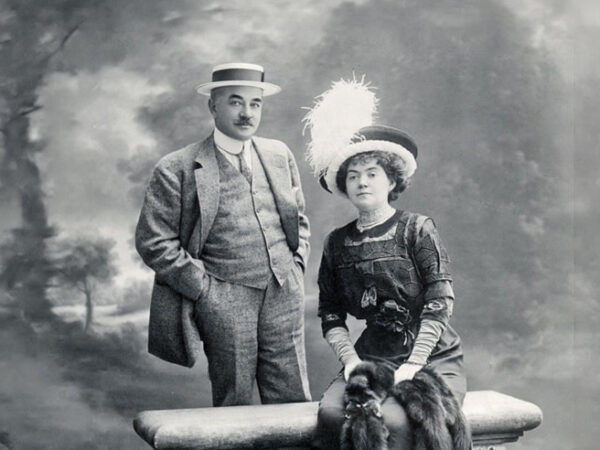
Milton and Catherine Hershey

The Hersheys

Learn about Milton and Catherine Hershey and how their lives came together.
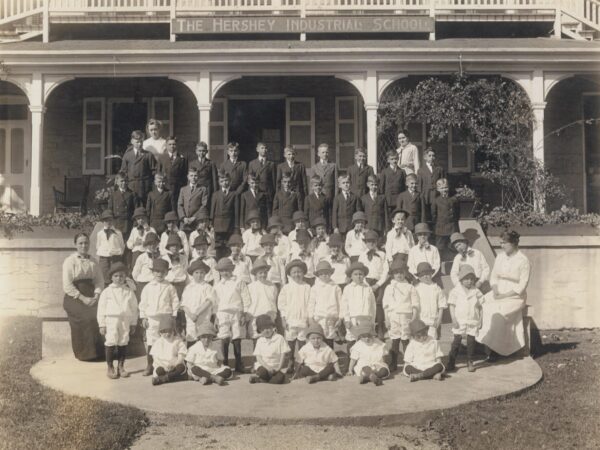
Hershey Industrial School in 1915

The Schools

Learn how the Hersheys’ living legacy is schools that continue to serve children seeking greater opportunity.
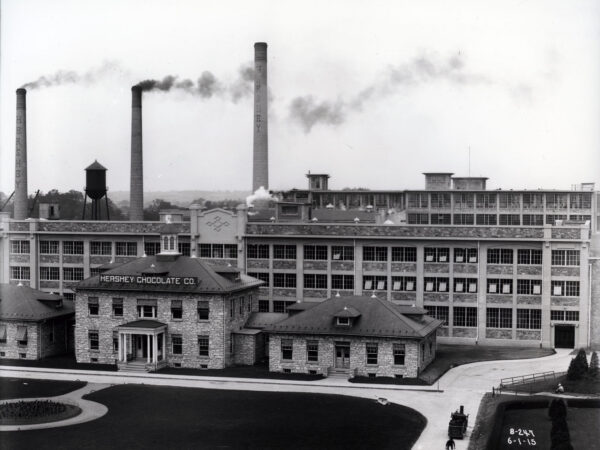
Historical photo of the Hershey Chocolate Company

Chocolate Company

See how the chocolate business developed, from early experiments to large-scale production.
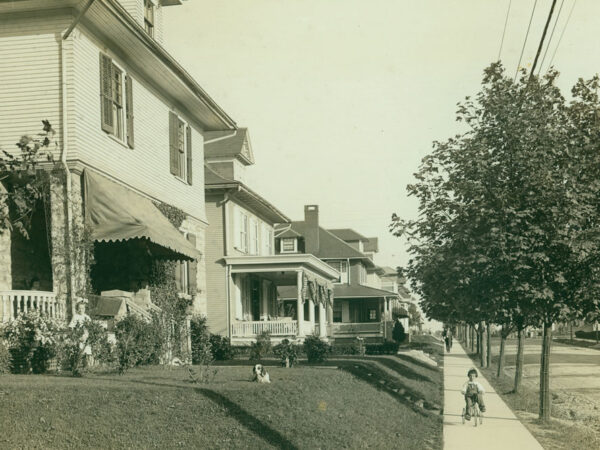
historical photo of a street in Hershey

The Town of Hershey

Discover how Milton Hershey created a community where families can thrive.

About the Hershey Entities

Today, the work of Milton and Catherine Hershey continues through five organizations referred to as the Hershey entities. While each entity operates separately, profits from the Hershey entities are used to support the schools.


The Hershey CompanyHershey Entertainment and ResortsMilton Hershey SchoolsThe MS Hershey FoundationHershey Trust Company