


“Do Unto Others”
Milton Hershey grew up in a Mennonite community. As an adult, he rarely spoke about his religious beliefs in public. When asked about his religion later in life, he answered simply, “The Golden Rule.” That standard shaped Hershey’s business practices and the organizations he built to serve others.
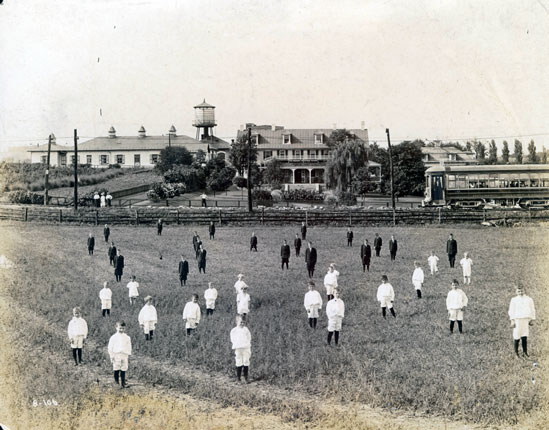
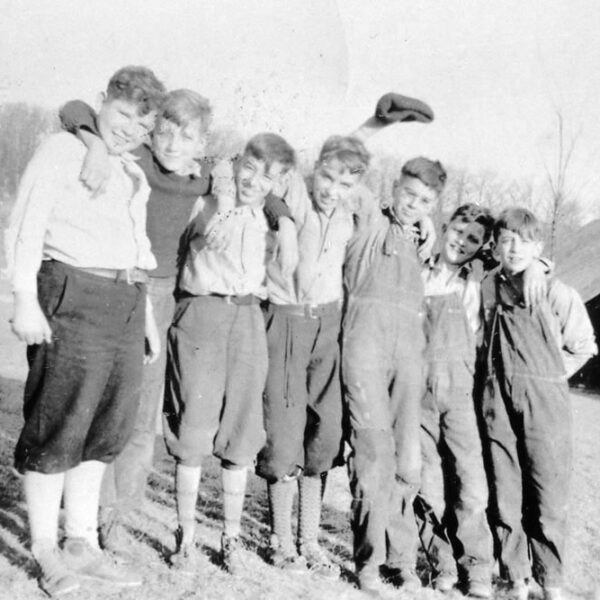
At the school he founded for children seeking greater opportunity, Hershey asked that both the Golden Rule and the Ten Commandments hang in every student home. There, he believed, students would see them each day and be reminded of how to treat one another.
This tradition still lives on today in more than 200 student homes across Milton Hershey School’s campus.
A Life of Service
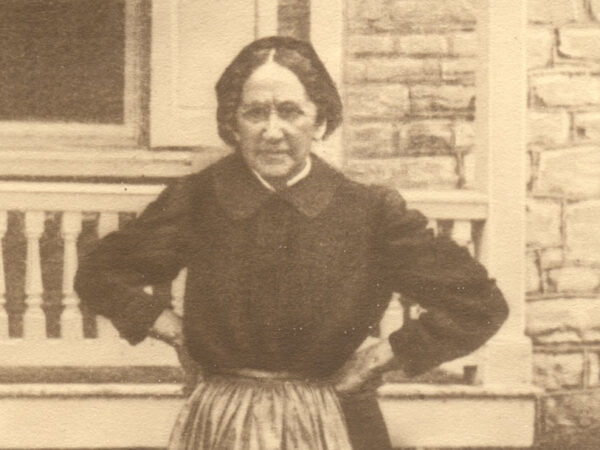
Catherine “Kitty” Hershey was raised in a Catholic household by Irish immigrant parents. While she did not publicly talk about her faith, Catherine showed it through the way she served others.
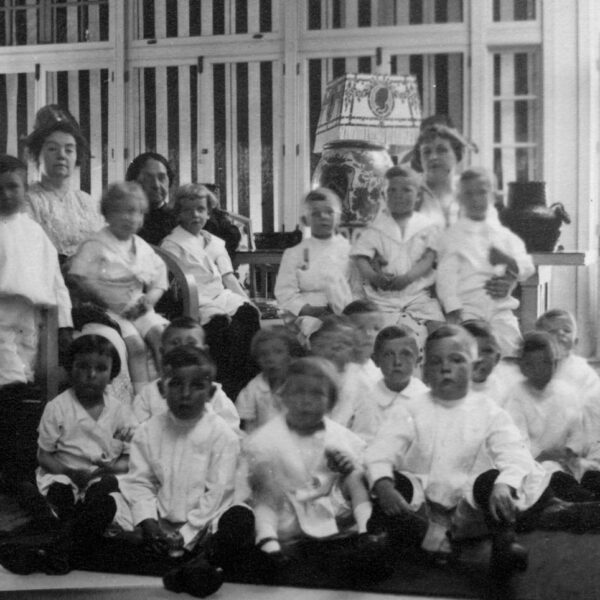
After marrying Milton Hershey, Catherine volunteered with the Lancaster Charity Society. There, she saw firsthand how children suffered when families lacked resources. When Milton and Catherine founded the Hershey Industrial School, later known as Milton Hershey School, he called it “Kitty’s idea.” He ultimately devoted his fortune to its future.
Together, they built more than a school. They created a long-term commitment to support children with the education, care, and opportunities they need to build their futures—a promise that continues today.
Hard Work and Perseverance
Before he built the business that would make Hershey a household name, Milton Hershey failed again and again. He did not give up.
His mother, Veronica “Fanny” Hershey, had impressed on him a lesson he carried for life: finish what you start. Fanny told him, “When you tackle a job, stick to it until you have won the battle.”
Milton Hershey carried those words with him throughout his life. He faced one failure after another, but instead of quitting, he chose to begin again.
April 1924“I failed. It was a bad beginning. Yes, and I had later troubles. I suppose I never would have done anything if I hadn’t kept coming back.”
Stewardship
Milton and Catherine lived during a period of rapid industrial growth. At the turn of the century, wealth was expanding for some. Hardship was deepening for others.
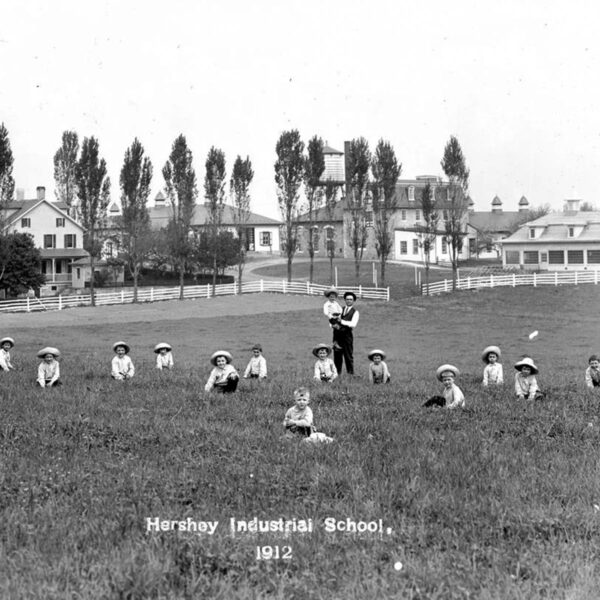
In 1918, Milton placed his controlling interest in the Hershey Chocolate Company in a trust for the benefit of his school for orphaned boys. That choice meant the company’s success would help sustain the school in perpetuity.
They used their wealth to support the Hershey community, too. Milton Hershey funded the early public schools in Derry Township. He built and furnished their buildings, and set up a trust fund to support them after his death. During the Great Depression, he kept workers employed through his Great Building Campaign.
In 1935, Milton Hershey gave much of his remaining fortune to create The M.S. Hershey Foundation, which provides educational and cultural opportunities to residents and visitors.
Values and Vision Timeline
1898
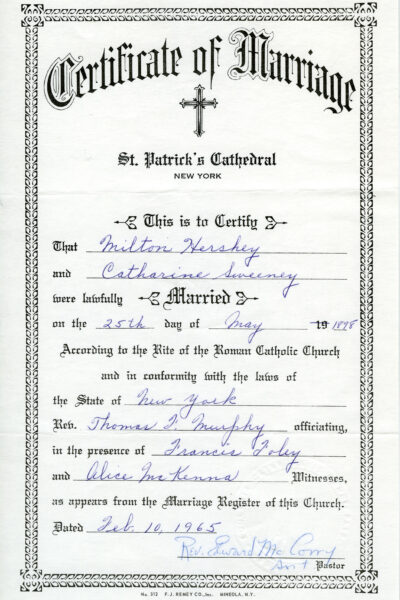
Milton Hershey and Catherine Sweeney married and began their shared philanthropic work.
1909
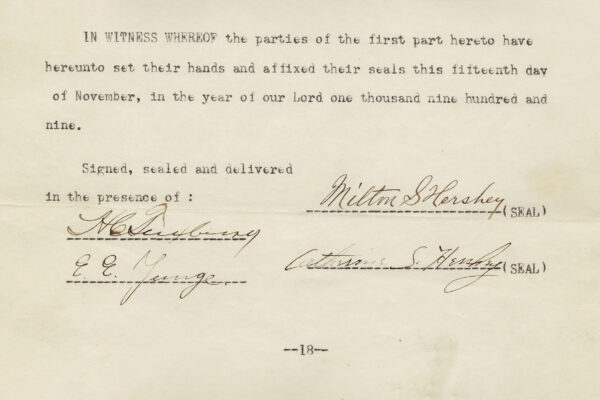
Milton and Catherine signed the Deed of Trust establishing the Hershey Industrial School, now known as Milton Hershey School.
1918
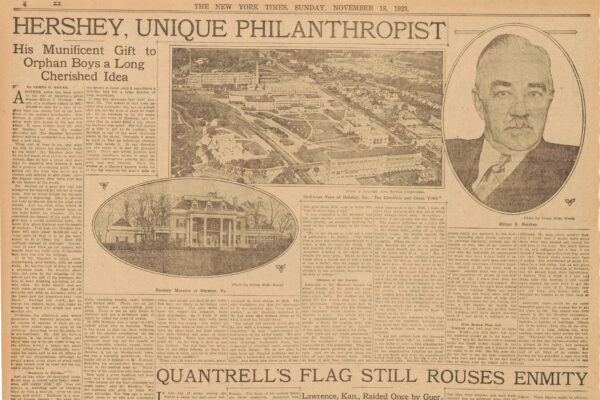
Milton Hershey transferred his fortune and controlling interest in the chocolate company to a trust to support the school. This gift was not made public until 1923, when it was reported in the New York Times.
1930s
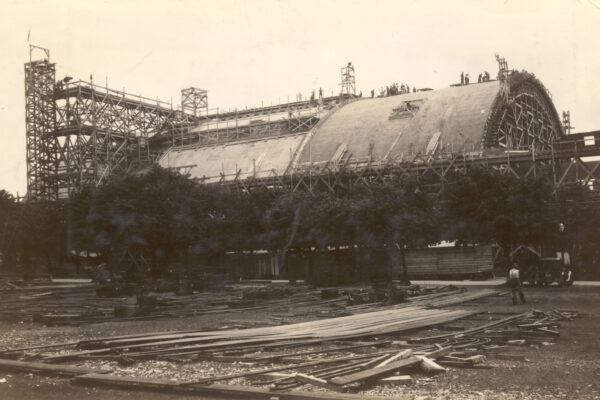
During the Great Depression, Hershey funded major building projects to keep workers employed. School enrollment also greatly expanded from 242 students in 1929 to more than 1,000 students by 1937.
1935
Milton Hershey established The M.S. Hershey Foundation to provide educational and cultural opportunities to the community.
Today
The schools, companies, and community that they created and supported continue to flourish today.
Trivia About the Hersheys’ Values and Vision
1. What religious tradition shaped Milton Hershey’s early upbringing?
Correct! Not quite — B is correct!
2. Who encouraged Milton Hershey to “stick to it” and never give up?
Correct! Not quite — C is correct!
3. Catherine Hershey was raised in which religious tradition?
Correct! Not quite — D is correct!
4. What simple principle did Milton Hershey say guided his life and work?
Correct! Not quite — B is correct!
5. Who influenced Milton Hershey’s decision to create and fund a school for children in need?
Correct! Not quite — A is correct!
Explore More of The Hershey Legacy
Catherine Hershey
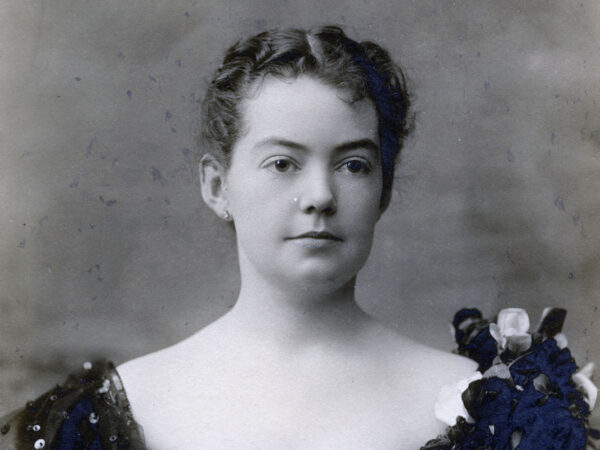
Catherine “Kitty” Hershey helped shape the legacy that became Milton Hershey School, and her influence can still be seen today.

The Schools
Learn how Milton and Catherine Hershey’s vision became schools that continue to serve students and families today.